ALPHABETICAL COLLECTION
Poems A–Z
Explore Alan’s published poems in alphabetical order. Read a poem here or follow its category to discover more from the collection.
-
THE CREATION
SIX PLUS ONE… guess the rhyme
A playful retelling of Creation through rhyme, participation, and wonder.
Read the written poem
SIX PLUS ONE – Interactive… guess the rhyme
On the FIRST DAY, GOD said, “RIGHT.
Let’s turn the darkness into … LIGHT.”
On the SECOND DAY, GOD said, “HI.
Let’s make sea and let’s make … SKY.”
On the THIRD DAY, GOD said, “GRAND.
I think I’ll make some jolly nice … LAND.”
On the FOURTH DAY, GOD was BRIGHT:
He made the sun for the day and the moon for the … NIGHT.
On the FIFTH DAY, God worked low and HIGH.
He put in the fish in the sea and the birds in the … SKY.
On the SIXTH DAY, GOD’s special PLAN:
First, He made the animals, then He made … MAN.
(AND WOMAN!!!)
On the SEVENTH DAY, GOD knew what was BEST.
He’d finished his creation, so He took a … REST.
Genesis 1/2
-
THE WANDERERS
The Backside of the Desert
Moses at the burning bush. A fun poem for the young at heart. Moses is counting his sheep; It usually sends him to sleep; He’s watching them gambol and leap, In the backside of the desert.
Read the written poem
The Backside of the Desert
Moses is counting his sheep;
It usually sends him to sleep;
He’s watching them gambol and leap,
In the backside of the desert.
There’s Wally and Bully and Bill,
And Molly and Scully and Gill;
There’s Dolly and Woolly and Dill,
In the backside of the desert.
There’s no sign, however, of Norris;
He’s probably gone AWOL with Boris;
They’ve both got a soft spot for Doris,
In the backside of the desert.
“I’m tired. I’m eighty. I’m old;
I’m definitely catching a cold;
Why won’t my sheep do what they’re told,
In the backside of the desert?
What’s this? It’s a bush. It’s on fire.
The flames rising higher and higher.
It’s not burning out. It’s a pyre,
In the backside of the desert.
I think that I’ll go take a look.
Perhaps there’ll be something to cook:
A sand-crab, a raven, a rook,
In the backside of the desert.”
A voice: “You are on holy ground.
Take your shoes off.” Moses looks round.
Just a bush and some rocks up a mound,
In the backside of the desert.
“I have seen the distress of the Jews.
They are mine. They’re the people I choose.
Tell my children in Egypt this news,
From the backside of the desert.”
What God said caused Moses to worry.
He found himself all of a flurry;
His bowels turned inside him to slurry,
In the backside of the desert.
He started to stutter and stammer;
I’m afraid he forgot all his grammar;
His heart pumping like a jackhammer,
In the backside of the desert.
“I’m a failure. I failed when I ran.
My big brother’s surely your man;
And just who are you?” he began,
In the backside of the desert.
But his arguments cut him no slack
With the LORD. He went back
To give Pharaoh and Egypt some serious flak,
From the backside of the desert.
Alan R Garner 30/09/17 (for Bethany Prenton’s Ladies at Two)
-
THE CREATION
The Default key
A poetic reflection on order, meaning, and forgotten divine structure
Read the written poem
The Default Key
What if
in saying
God
spoke
only
seven words
and the seventh
bespoke
only
peace
and then we
rearranged words
one
and six
and three
and four
and two
and five
and seven was forgot
and we are ever
rearranging
six
knowing not
that seven is the key
the default key?
-
Childrens Poetry
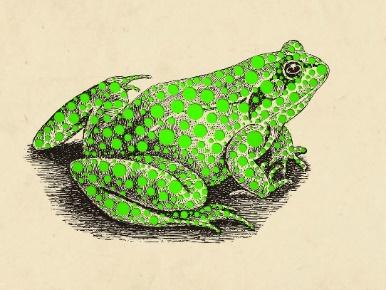
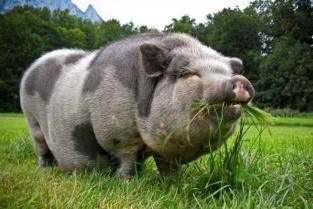
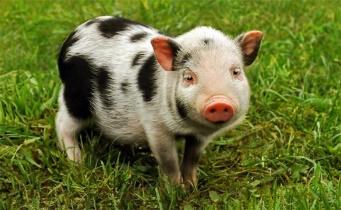
The Frog and The Bear and The Grunter
One of Froggie's many tales. It isn't always clear how many of these adventures really happened. 🙂 The Frog and the Bear, they went hunting For salmon and honey and pie; But they got tangled up in the bunting And they ended up in a ’sty. Where they met an old Porker called Grunter Who was grunting and searching for truffles; When the Frog said the Bear was a Hunter, Well, the Pig had a fit of the snuffles
Read the written poem
The Frog and the Bear and the Grunter
The Frog and the Bear, they went hunting
For salmon and honey and pie;
But they got tangled up in the bunting
And they ended up in a ’sty.
Where they met an old Porker called Grunter
Who was grunting and searching for truffles;
When the Frog said the Bear was a Hunter,
Well, the Pig had a fit of the snuffles.
It seemed that Old Grunter was rheumy;
He was wheezy and struggled for breath.
Of course, this had made him quite gloomy:
Meditating each day on his death.
Said Froggie, ‘You need a diversion:
To take yourself out of yourself;
Just think of it as an excursion,
A day trip – just for one’s self.”
So, Grunter said, “Thank you and please, please,”
As he snuffled his way up the road.
And Froggie shared half of his pie and cheese,
Explaining he wasn’t a toad.
But the Bear was more focused, and spotted
That a way through the woods was at hand
Through a thicket, all twisted and knotted,
So dense it was tough just to stand.
Then they heard in the brushwood, a wailing,
A keening, a crying, a grief.
They scoured the glade, Grunter trailing,
Till they came on an old Christmas wreath
Where a terrible struggle was witnessed:
A young Porker caught by the hoof
In the holly, and more than a bit-stressed.
In fact, he was raising the roof.
Our Froggie sat down with the Porker
And related some tales from The Pond;
Old Grunter pronounced him a Corker,
While Bear set to breaking the bond.
On the way home, they sauntered then capered,
While the Piglet looked dazzled and dazed.
Froggie spoke of how Porker ‘escapered’;
Old Grunter was simply amazed.
When they heard that the Porker was ‘sty-less’,
And had nowhere to truffle or wallow,
Old Grunter said: “Please, stay at my place.
You can bed down in my sow’s old hollow.”
Young Porker was chuffed to the gunnels;
He rocked and he rolled in the mud.
While Grunter began making tunnels
Named Brave Bear and Froggie the Good.
Then, Froggie and Brave Bear waved goodbye,
Saying what an excursion they’d had;
While the Porkers tucked into a Mud Pie
Eating twice as much food as they should.
Said Froggie, “I like an Adventure.”
Said Bear, “I’d say that turned out well:
Except for the thorn in my denture,
And, of course, that unspeakable smell.”
Said Froggie, “I recommend honey
Rubbed into the base of your tooth.
Ensure that the honey is runny.
Don’t mind about being uncouth.
And as for the smell, well, it won’t last for ever;
Already it’s starting to stale.”
THREE CHEERS FOR THE PORKERS, THE FROG AND THE BEAR.
And that is the end of the tale.
A Froggie Poem– finished 030924
A.R. Garner.
“Of course, it should say: ‘And that’s the end of the story.’
But it doesn’t rhyme.

-
Childrens Poetry
THE LITTLE CATERPILLAR
A very sad story about a little caterpillar. It always makes Froggie cry. The Caterpillar sat on the branch of a tree; Hungry little caterpillar Waiting for his tea. He’d really rather sit and munch A tasty, juicy leaf for lunch.
Read the written poem
THE LITTLE CATERPILLAR
The Caterpillar sat
on the branch of a tree;
Hungry little caterpillar
Waiting for his tea.
He’d really rather sit
and munch
A tasty, juicy leaf
for lunch.
Instead, alas,
A greedy bird
Will eat him up
Because it heard
Him singing songs
About his tea
Sitting on the branch
Of the Butterfly Tree.
“Oh, how I wish
I were with mum.”
He groaned inside
The Big Bird’s tum.
But sadly, he’s now squelchy mush
Within the belly of a thrush. ☹ A.R. Garner 230412
-
TOLD TALES
The Prodigal Father
Who was really prodigal in the parable of the Prodigal Son? This is the tale of the fatted calf – And if you’re a veggie, it’s time to switch orf. Rich meat – a tasty treat – Too fat by half.
Read the written poem
The Prodigal Father – A Thrashing of Thorns
This is the tale of the fatted calf –
And if you’re a veggie, it’s time to switch orf.
Rich meat – a tasty treat –
Too fat by half.
Real veal – a top meal,
Much better than mutton;
Roasted with champignons,
Chestnut and button.
Witness the fatted calf fed on the best;
Leftover leavings were fed to the rest.
Fat calf – such a larf – wouldn’t eat his crusts –
Gave them to the sparrows – who relished them, one trusts.
Well one day – in May – when the sun was setting,
Farmer Fred – Grey Head – set the fat calf sweating:
Built a barbie right on cue and sat the calf on top.
Don’t wriggle – sit still: you’re for the chop.
Fat calf wasn’t happy – you can hardly blame him;
Screamed in protest – swore in Turkish – terror overcame him.
Till they told him how he came to top the evening menu:
Me ‘n you are celebrating: son number two.
He’s home – no comb and a flea or three;
Back from SIN CITY – truly sorry – see?
He was lost – now he’s found – he was dead and gone.
Now he’s back from the grave – and I’ve got my son.
Fat calf smiled a smile. Said he was delighted.
Hadn’t known the son was missing but could see Fred was excited.
Said to Fred, “You need me dead. That’s why you chose to feed me.
Pleased to hear about your son. Now be careful how you bleed me.”
If you’d have been the fatted calf, would you have been so willing
To lay upon the barbecue, and star as top billing?
Did it for the Master. Did it for his son.
Joined in the celebration. Fed the guests for fun.
Fat calf – too fat by half – such a tasty treat –
Willing sacrifice, he gave them his best meat.
Willing sacrifice, He gave them His only Son.
Prodigal – the Father – aye: that’s the One.
Luke 15
-
THE VISITATIONS
The Quiet of the Land – Elizabeth
Taken from Shards from the Pot Elizabeth speaks about her lifelong desire to see God's Mashiach come. We are the Quiet of the Land. We watch and we wait … in silence and seclusion. We wait for the Coming of the Mashiach, the Consolation of Israel, the Redeemer of His people. All my life I have been a Quiet One – “Too quiet by half!” “Too quiet for her own good!” As quiet as a mouse. But not timid. No. Thinking. Dwelling. Wondering. Waiting. Watching.
Read the written poem
The Quiet of the Land
Elizabeth speaks – Shards from the Pot
We are the Quiet of the Land.
We watch and we wait … in silence and seclusion.
We wait for the Coming of the Mashiach,
the Consolation of Israel,
the Redeemer of His people.
All my life I have been a Quiet One – “Too quiet by half!” “Too quiet for her own good!” As quiet as a mouse. But not timid. No. Thinking. Dwelling. Wondering. Waiting. Watching.
When I married, I spoke the vows but said little else. I spoke to Zechariah. Well, of course I did. A faithful wife does not refuse her beloved. We had plenty to say… to each other…. us two…not always in words.
And we waited for the child to arrive. Year upon year. Hoping. Trusting. Expectant. But no child came.
There was a sadness behind the veil of my husband’s eyes. I believe he blamed himself. Who can say? Certainly, I blamed myself.
In the end, we stopped speaking about it. We never stopped praying about it. But it became obvious that for us a child was not in God’s plans. Not God’s will … for us two.
We had, however, a deeper desire … a desire that grew as the years passed… to see the birth of the one who would fulfil the ancient prophecies: turn the hearts of the fathers to their children and their children’s hearts to their parents. Our favourite texts became the Prophets … the Book of the Twelve … before the LORD had ceased to speak through men.
And so, we waited.
The words of Malachi, the Messenger, best resonated with us. We could see how we had failed the Lord, deserved his displeasure, invited his rebuke. It was the priests who bore the brunt of his disappointment and contempt. We were determined not to be numbered with those who had failed our Lord. We took a vow to serve Him faithfully … to wait for the coming of the Forerunner, the Harbinger of Joy and Salvation, and the Messenger of the Covenant who would come suddenly to His Temple like a Refiner’s Fire to purify the Priesthood and to bring Redemption for His people.
And so, we waited. Year upon year we waited. No child for us…yet if we could but live to see the comingagain of the Prophet Elijah and the Sun of Righteousness rising with healing in his wings…
And then… the lot was cast … Zechariah was called to serve his course in the Temple, the culmination of a lifelong desire to offer incense before the Lord. We said little but I could see the fire in his eyes… one last joy for him and one final satisfaction for me … my husband would serve the Lord in the division of Abijah.
He left for the city. I waited in the hill country. Seven days went by and then another seven as he served with all of the priests at the Festival of Shavuot while I anticipated his return. There would be much to talk about…words and no words…much to say.
But when he returned, he could not speak at all. There was so much to say but no words to speak. It was good that we had learnt to be silent … to say much without words.
Of course, in time, he shared the Angel’s declaration … words written in the sand…words of promise and fulfilment anticipated.
I hardly dared to hope but hope I did. Our God is not to be mocked.
And one day I knew … the child stirred within me … the waiting for the messenger was over. In God’s own time, his own good time, this child would be born. What manner of child he would be, the Angel had said, but only God truly knew.
How we would raise him, only time would tell. Time …we still had time. The Lord has remembered his servant;
the Lord has done this for me;
the Lord has taken away my disgrace.
Blessed be the Name of the Lord.
We are the Quiet of the Land.
We watch and we wait … in silence and seclusion.
We wait for the Coming of the Mashiach,
the Consolation of Israel,
the Redeemer of His people.
-
ENCOUNTERS
The Rich Young Ruler #1
A reflection on the relative riches of the Rich Young Ruler. The rich young ruler was very, very rich. He didn’t need to sew; he didn’t need to stitch. He bought all his clothes from Magnificent Mitch: The most expensive shop in town.
Read the written poem
The Rich Young Ruler – Odd Odes
The rich young ruler was very, very rich.
He didn’t need to sew; he didn’t need to stitch.
He bought all his clothes from Magnificent Mitch:
The most expensive shop in town.
The rich young ruler was very, very young.
His lips were perfect; so was his tongue.
He’d climbed the social ladder to the very top rung:
He couldn’t climb any higher.
The rich young ruler was always in charge.
He had a big business; his workforce was large.
He rode a Turbo Camel; he drove a Bentley Barge
In the grounds of his very own mansion.
The rich young ruler had everything you need,
Except in one area where he wasn’t up to speed:
The A List for Eternal Life – he’d do any deed…
Except give his money to the poor and put God First.
Rich young ruler wasn’t really rich at all.
Matthew 19
-
THE REBELS
The Story of the Fall
Mankind chooses to say NO to God and to go their own way.
Read the written poem
The Story of The Fall
The story of the FALL
Is the story of us ALL
When God says,
“SAY YES.”
We say, “NO!”
NO NO
NO to God
NO to God
NO to God
NO NO
No to God
We say, “No!”
So…
God says to Adam,
“Adam,” says HE.
“This is your garden
And this is my tree.
“You can eat any fruit
From any other tree.
But don’t eat my fruit
From my special tree.”
Adam says,
“YES, God.
YES, God.
YES, God.”
Eve says,
“YES, God.”
But the Snake says,
“NO!”
So…
The Snake says to Madam Eve,
“Madam,” says he,
“Take a bite of God’s fruit
T – A – S – T – Y!!!”
Madam Eve sees the fruit,
smells and touches God’s tree,
takes and tastes God’s special fruit,
The fruit called ‘ME’.
Eve says,
“ME,” to GOD.
“ME,” to GOD.
“ME,” to GOD.
“ME ME ME,” to God.
“ME ME ME.”
THEN…
Eve says to Adam,
“Adam,” says she.
“God’s fruit is the best.
Take a bite and see.”
Adam, the Mad Man,
Listens to his wife:
Munches on the ME ME fruit
And loses his life.
“MUNCH MUNCH
LOVELY LUNCH
CRISPY CRUNCHTHANKS A BUNCH
MY MY …
EYE EYE
I’M IN
MY SKIN!!”Just then…
God goes for a walk
In the garden on His own.
MEANWHILE…
They play hide and seek
“P-le-ase, God, leave us alone.”
“Where are you, daughter?
Where are you, son?
Why are you hiding?
What have you done?”
“Well…I’ve got no trousers, God.”
“And I’m in my birthday suit.”
“Who told you…Adam, Eve?
Did you eat my special fruit?”
“Me? Me? Don’t blame me,”
Says Bad Man Adam.
“I didn’t eat it first.
I blame the Madam.”
“No! No! No! Not me!
It’s all a big mistake.
I didn’t mean to eat the fruit.I blame the Snake.”
The Snake says nothing.
God says, “Go.
You have to leave the garden.
You chose to say ‘NO’.”
NO NO
NO to God
NO to God
NO to God
NO NO
No to God
You chose to say ‘NO’.
BUT…
“I promise I will send a Man-
Adam all-in-glory.
He’ll mend this ME ME MESS.
He’ll say, ‘YES. YES.’”
But that’s another story.
The story of the FALL
Is the story of us ALL
When God says,
“SAY YES.”
We say, “NO!”
-
THE PEREGRINATORS
They threw him into a pit
Joseph is betrayed by his brothers and sold into slavery. They threw him into a pit; He was large– so he didn’t quite fit; He probably thought: “This is it. I’ll be dead soon.” … Old Reuben had something to do, Leaving Judah in charge of the crew; “Let’s kill him – he’ll go with the stew.” “Nah! Too greasy!”
Read the written poem
They threw into a pit
They threw him into a pit;
He was large– so he didn’t quite fit;
He probably thought: “This is it.
I’ll be dead soon.”
His brothers were nasty and mean;
There were ten of them: lanky and lean;
They sat down for soup: lamb and bean;
Just after noon.
Old Reuben had something to do,
Leaving Judah in charge of the crew;
“Let’s kill him – he’ll go with the stew.”
“Nah! Too greasy!”
“Let’s sell him. He’s worth a few bob;
He’d make a good slave – the fat slob."
Some merchants came by – just the job;
All too easy!
So, they sold him for silver. They did.
Twenty pieces changed hands for the kid.
“Who’ll buy …?” There was only one bid:
Wandering Arabs.
They made him walk after their camels;
Such extraordinary mammals;
They were traders in spices, enamels
And silver scarabs.
Eventually made it to Egypt;
Joseph thought he’d end up in a crypt;
While his new master had him stripped
And branded.
But he didn’t lose heart – he worked hard;
His faith, undiminished, in God
Kept him going, though scarred,
Stretched and stranded.